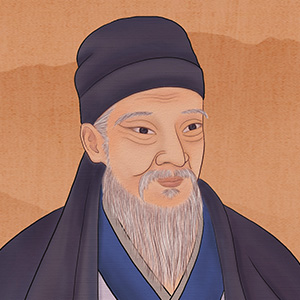
Meng Haoran
Introduction
Meng Haoran (689-740) was a prominent poet of the Tang Dynasty, a period often referred to as the golden age of Chinese poetry. Known for his vivid depictions of nature and the emotional depth of his work, Meng Haoran is celebrated for the elegance and simplicity of his verses. His poetry often reflects the serene beauty of the natural world and the introspection it inspires.
Early Life and Background
Meng Haoran was born in what is now Xiangyang, Hubei province, into a scholarly family, which provided him with a strong Confucian education. Despite the expectations of his family, Meng chose the path of a poet over that of an official. His decision to focus on poetry rather than pursuing a career in the civil service distinguished him from many of his contemporaries, who often balanced both roles.
Literary Contributions
Meng Haoran's poetry is characterized by its clear imagery and reflective tone, often exploring themes of solitude, the passage of time, and the changing seasons. His work is noted for its ability to evoke the tranquility of rural life and the profound beauty of nature. One of his most famous poems, Spring Morning, captures the quiet beauty of a spring day and the fleeting nature of life. The poem describes waking in the morning to the sounds of birds after a night of wind and rain, pondering the fallen flowers, which serves as a metaphor for the impermanence of life.
Influence
Meng Haoran was a significant influence on other poets of the Tang Dynasty, including the renowned poet Wang Wei, who was both a contemporary and a friend. Wang Wei admired Meng Haoran's work and often drew inspiration from his themes and style. The friendship between the two poets is well-documented and serves as an example of the collaborative and interconnected literary culture of the Tang period.
Meng Haoran's work has been celebrated for its purity and its ability to capture the essence of the natural world. His poetry has been translated into numerous languages and continues to be studied for its artistic and cultural value. The English translations by Xu Yuanchong in the collections 300 Tang Poems and 300 Tang & Song Poems have helped introduce Meng Haoran's work to a broader audience, highlighting the universal appeal of his themes.
Meng Haoran in Art and Culture
Meng Haoran has also been depicted in various forms of Chinese art. His image as a solitary figure riding a donkey through a winter landscape has become an iconic representation of the wandering poet. This imagery reflects his life's journey and the introspective nature of his work. The association of poets with particular visual symbols speaks to the deep interconnection between poetry and painting in Chinese culture, a relationship exemplified by the Tang and Song dynasties.
In modern times, Meng Haoran's work continues to inspire artists and musicians. His poem Spring Morning has been adapted into music, and his life and work remain subjects of interest in academic and cultural studies. The enduring appeal of Meng Haoran's poetry lies in its ability to evoke both the beauty of the natural world and the inner landscape of human emotion.








